01 · FRAMEWORK
Define Improvement
What outcomes are we actually trying to improve?
MBFC + SH is a practical language for evaluating decisions by what they improve—and what friction they create. The four-book series extends that thinking into judgment, organizational design, and leadership capability.
For leaders, managers, and teams responsible for making decisions, improving work, and building stronger organizations.
.png) FRAMEWORK
FRAMEWORK.png) JUDGMENT
JUDGMENT.png) ORGANIZATIONS
ORGANIZATIONS.png) CAPABILITY
CAPABILITYFour books examine four connected questions—from defining improvement to building an organization capable of continuing it.
What outcomes are we actually trying to improve?
How should we decide before the outcome is known?
What organizational conditions shape those decisions?
What can the organization eventually do without the leader?
Improvement provides the direction. Judgment improves the decision. Architecture shapes the environment. Leadership builds the capability to continue.
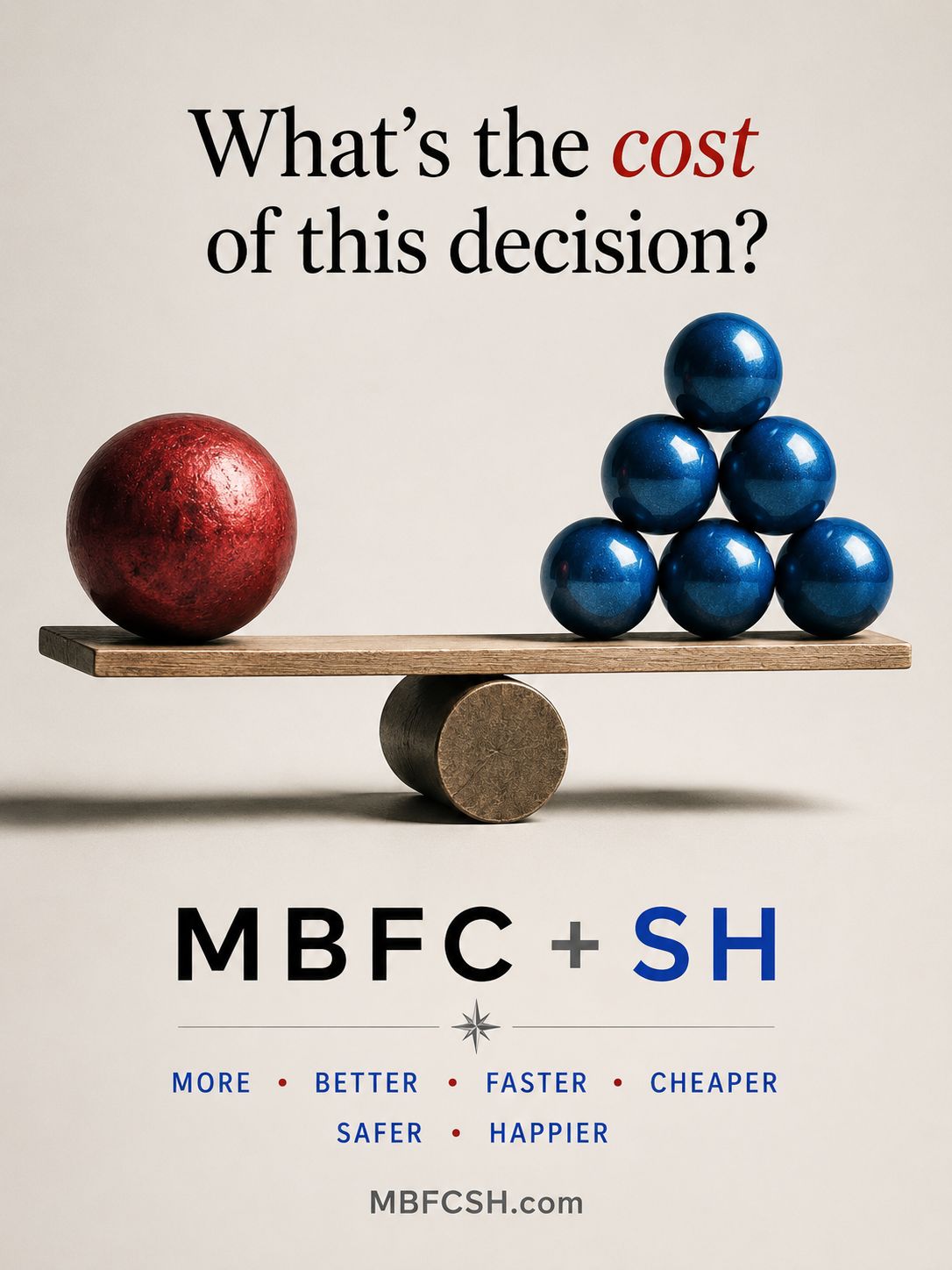
The visible price is rarely the entire consequence. Better decisions consider value, friction, tradeoffs, duration, significance, and effects across the whole system.
This question connects the practical examples throughout MBFC + SH with the deeper progression of the four books.
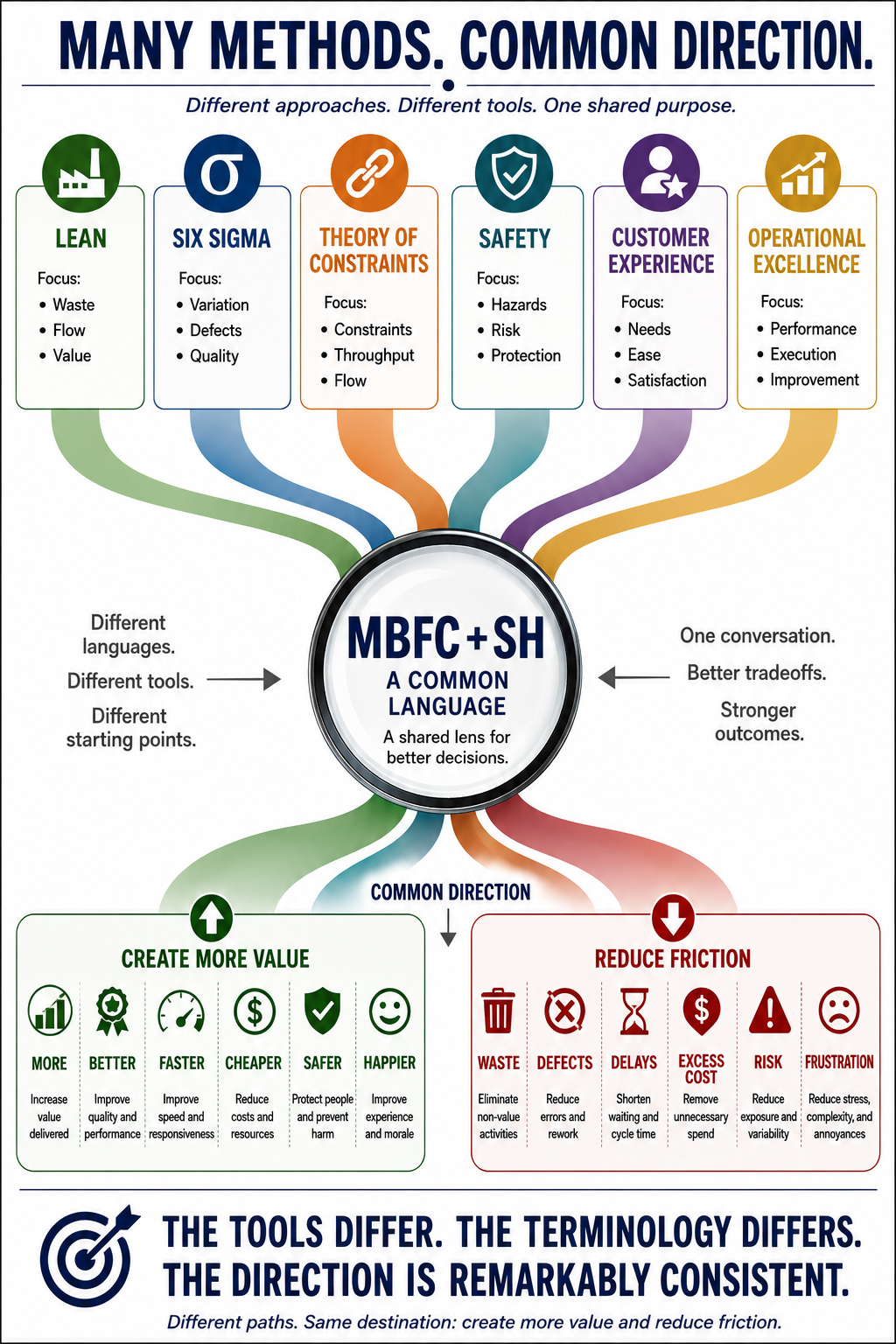
Different approaches. Different tools. One shared purpose.
MBFC + SH does not replace Lean, Six Sigma, Theory of Constraints, safety, customer experience, or operational excellence. It provides a common language for examining what different approaches are ultimately trying to accomplish.
The tools differ. The terminology differs. The direction is remarkably consistent.
Framework → Judgment → Organizations → Capability
Start with Book 1 for the complete progression, or enter the series where the question is most relevant to you.
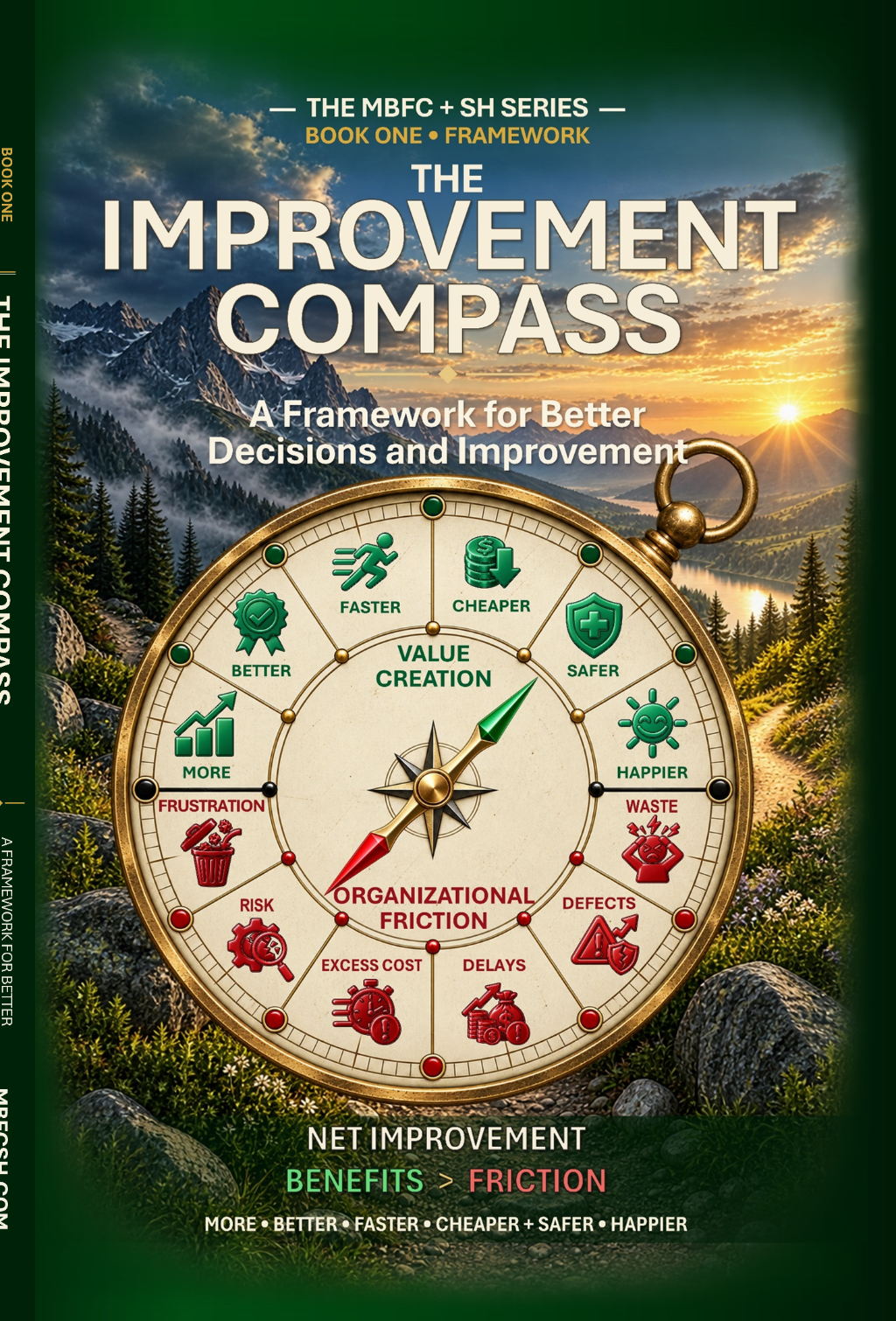
Evaluate decisions through value creation, organizational friction, tradeoffs, and net improvement across the whole organization.
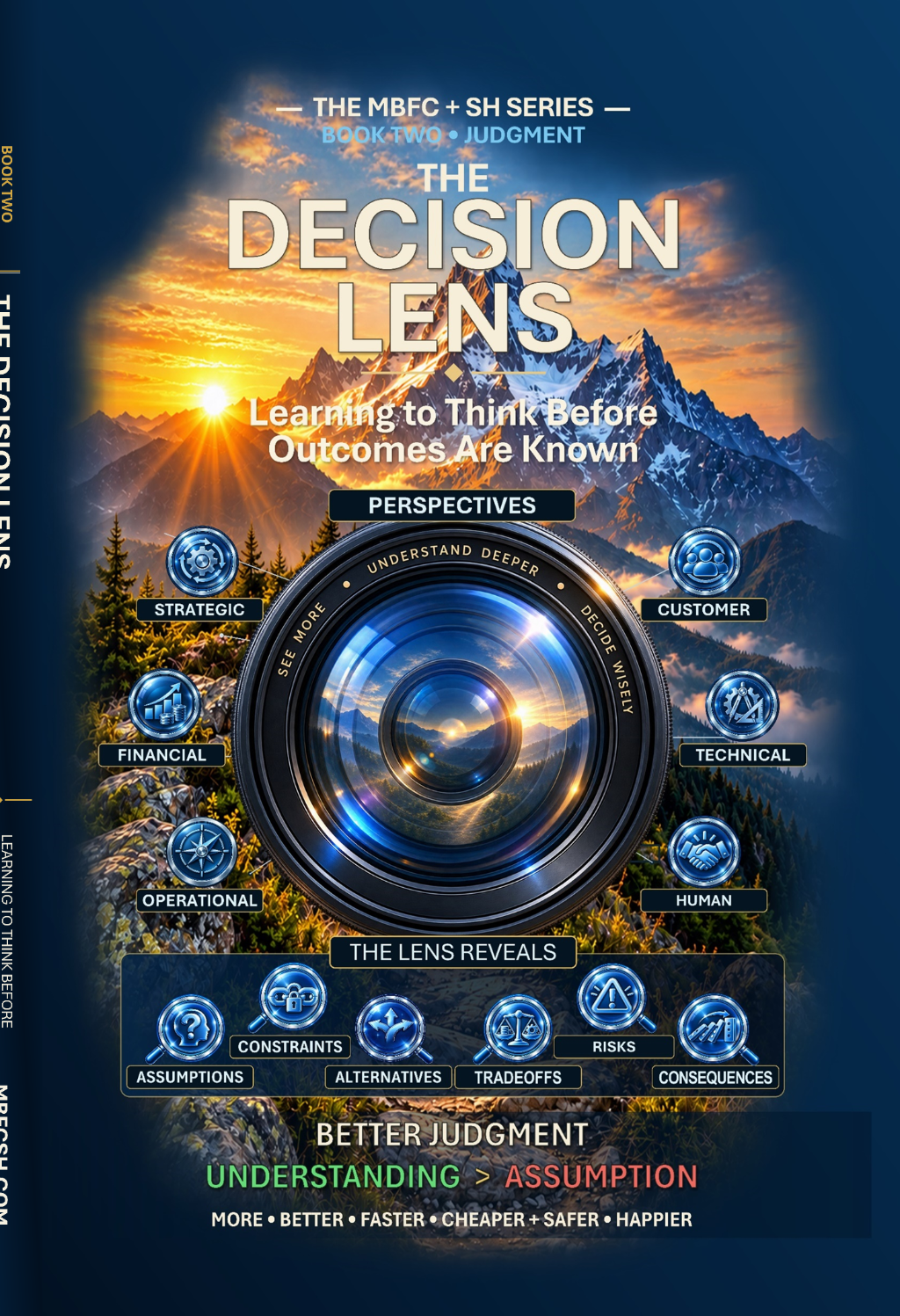
Examine decisions through multiple perspectives, challenge assumptions, and consider alternatives, tradeoffs, risks, and consequences before results tell the story.
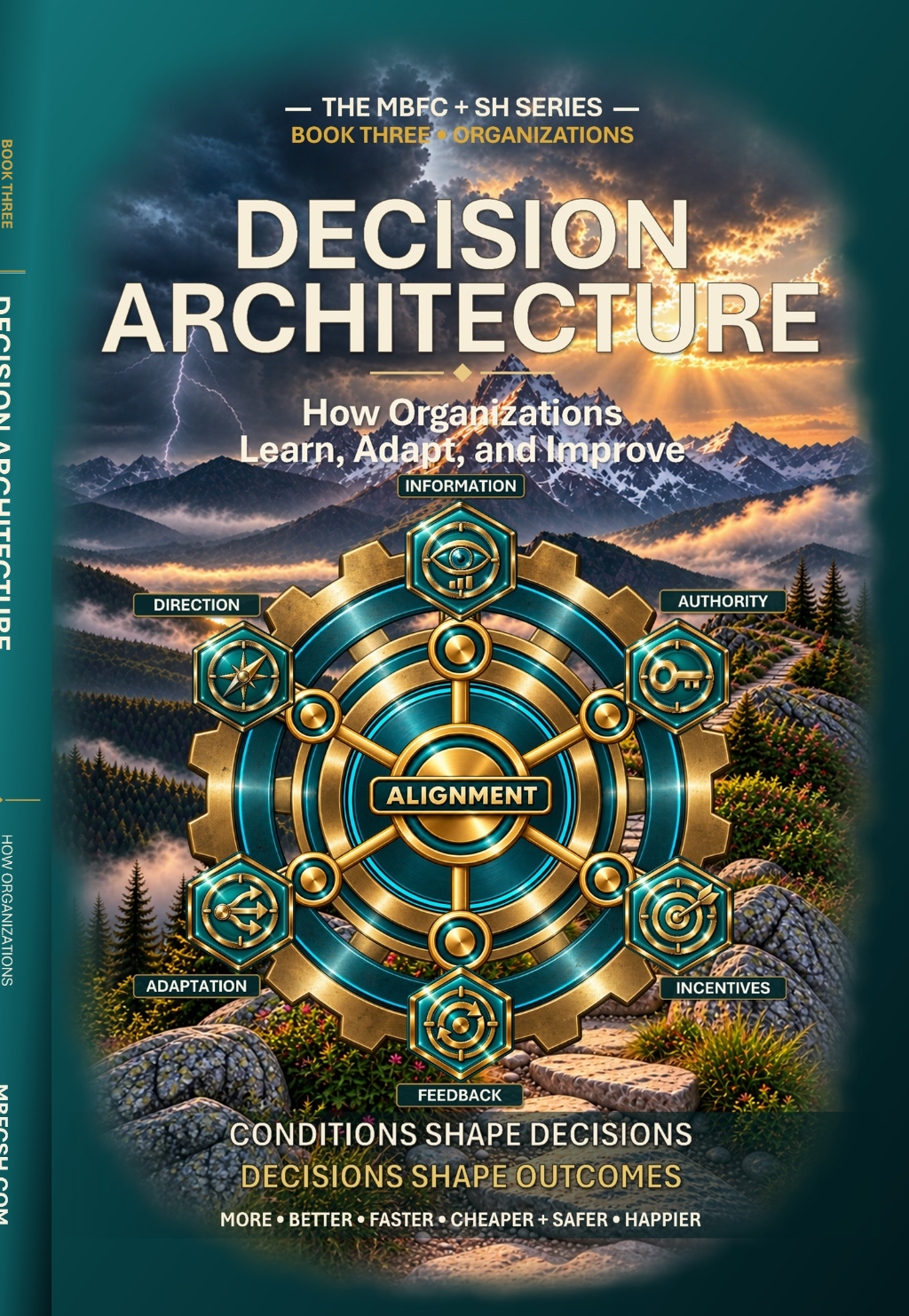
Shape the decision environment through Direction, Information, Authority, Incentives, Feedback, and Adaptation so the organization can learn and improve.
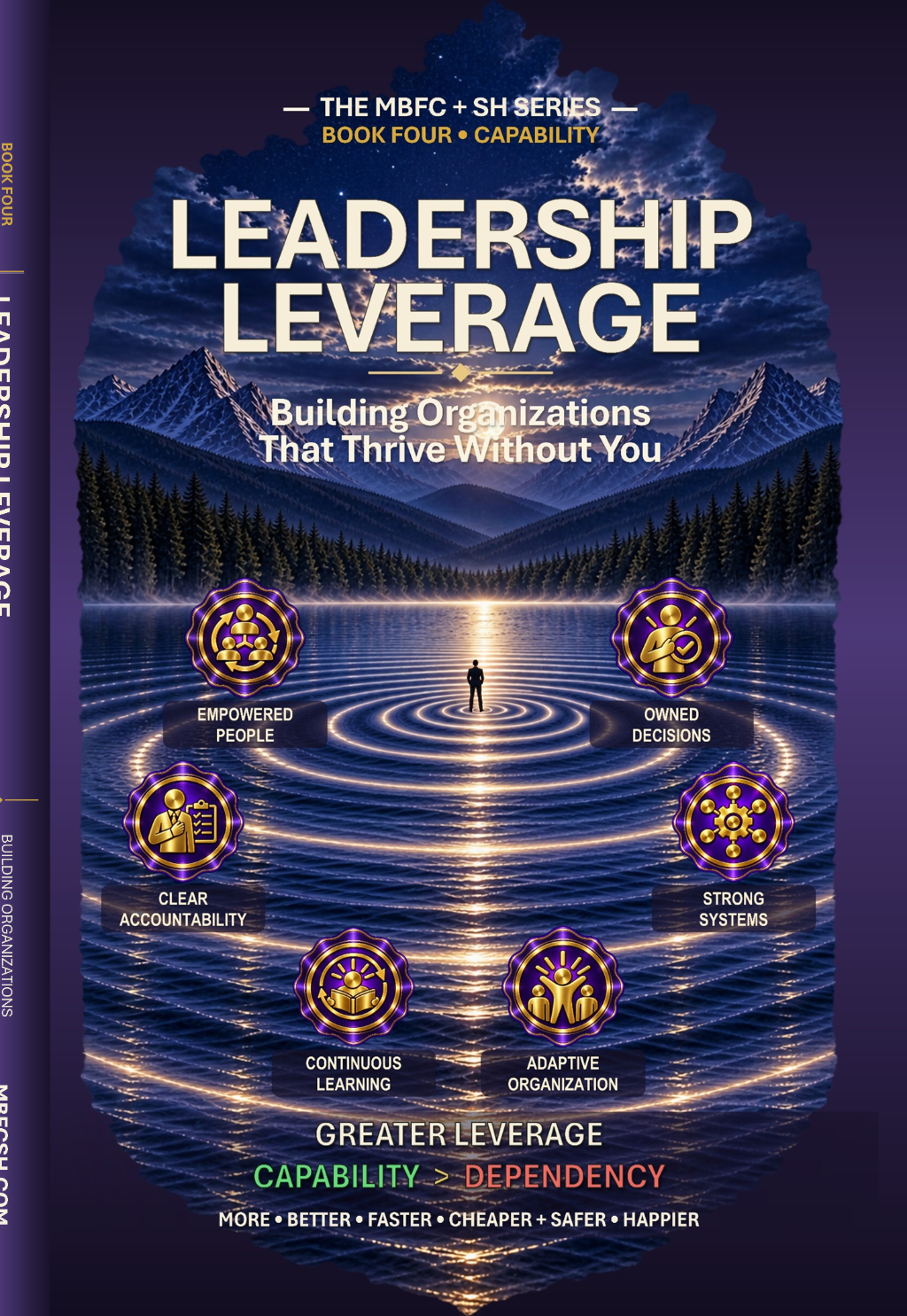
Develop empowered people, owned decisions, clear accountability, strong systems, continuous learning, and an adaptive organization.
Download the practical tools, read the opening of each book, and explore the real-world cases used throughout the series.
Read the Preface, Introduction, Part I opening, and Chapter 1 from each book.
Explore Book Previews →Browse the organizations, decisions, and challenges examined throughout the series.
Explore Case Studies →Each book approaches better organizations from a different direction—improvement, judgment, organizational design, and leadership capability.
“Better questions often lead to better discussions. Better discussions often lead to better decisions.”
Book One · The Improvement Compass
“Better decisions rarely emerge from better answers alone. They emerge from better thinking.”
Book Two · The Decision Lens
“Every organization has a decision architecture. The question is whether it has been designed deliberately—or merely inherited.”
Book Three · Decision Architecture
“The best leaders do not make themselves irrelevant. They make their organizations more capable.”
Book Four · Leadership Leverage
Read the series, use the resources, or bring the ideas into a real organizational challenge.
Read the books, use the previews, and explore the case studies to understand the connected MBFC + SH progression.
Explore Resources →Use the practical toolkits to examine decisions, organizational friction, decision architecture, and leadership capability in your own work.
Use the Toolkits →Bring the ideas into your organization through facilitated discussions, workshops, training sessions, bulk book orders, or other organizational applications.
For Organizations →